AI in the Classroom: Powerful Partner or the Next Teacher?
Dive into experiences, tips, and reflections from educators shaping the future of teaching with develop2teach.
EDUCATION AND LEADERSHIP
Paul Collin
12/14/20252 min read
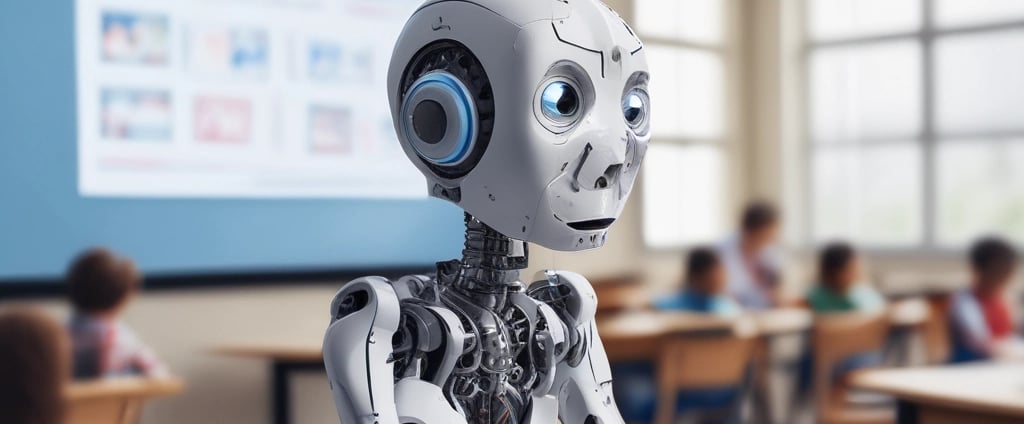
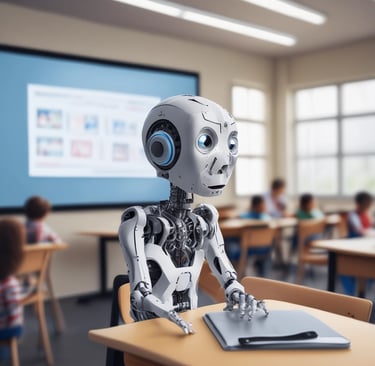
Walk into almost any staffroom today and you will hear the same question whispered somewhere between lesson planning and marking: What does AI mean for us? Is it the next transformative tool for education, or the first step toward replacing the teacher altogether?
The short answer, supported by a growing body of research, is reassuring: artificial intelligence is not the next teacher. It is, however, becoming one of the most powerful tools education has seen in decades.
From EdTech to “Ped-Ed”
Educational technology is not new. Learning management systems, online assessments, and adaptive software have been shaping classrooms for years. What is new is the speed, scale, and sophistication of AI-driven tools. Researchers are now starting to refer to this shift as “ped-ed”—the intersection of pedagogy and education powered by intelligent systems that respond to how students actually learn, rather than how content has traditionally been delivered.
Studies from organisations such as UNESCO, OECD, and leading universities consistently highlight the same benefit: AI excels at personalisation. Intelligent tutoring systems can adapt questions in real time, provide immediate feedback, and identify learning gaps long before a summative assessment would. In other words, AI is very good at the repetitive, data-heavy tasks that consume teacher time but do not require human judgment.
What AI Does Well—and Why That Matters
AI can analyse patterns across thousands of student interactions in seconds. It can recommend differentiated resources, support formative assessment, and assist with administrative workload. Research shows that when teachers use AI tools to support planning and assessment, they gain back time—time that can be reinvested in student relationships, feedback, and instructional design.
Importantly, evidence also suggests that AI is most effective when paired with strong pedagogy. Technology alone does not improve learning outcomes. Teachers do. AI simply amplifies good teaching practice by making it more targeted and responsive.
The Limits of Artificial Intelligence
Despite rapid advances, AI still lacks what defines great teaching: emotional intelligence, ethical judgment, cultural awareness, and the ability to inspire. Classrooms are human systems. Motivation, trust, curiosity, and belonging cannot be automated. Research in educational psychology consistently reinforces that learning is deeply social, shaped by relationships and context—areas where human educators remain irreplaceable.
This is where fears about AI “becoming the next teacher” fall apart. AI does not understand why a disengaged student suddenly improves, how family dynamics affect learning, or when a lesson needs to change direction because the room feels flat. Teachers do.
A Tool, Not a Replacement
The future of education is not teacher versus AI. It is teacher with AI. As ped-ed continues to emerge as a discipline, the focus is shifting from what technology can do to how educators can use it ethically, critically, and creatively.
AI will reshape classrooms, but not by replacing teachers. Instead, it will quietly take on the background work—analysis, suggestions, automation—while teachers do what they have always done best: teach humans, not data.
In that sense, AI is not the next teacher. It is the next great teaching assistant.
Contact
Office
Develop2teach © 2025. All rights reserved.